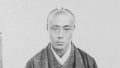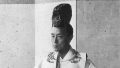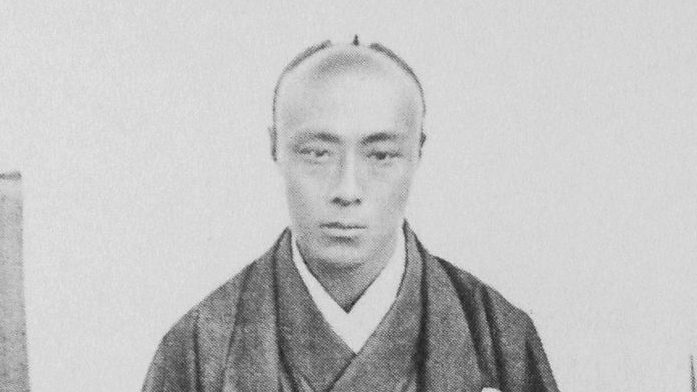
In this article, I introduce to you what kind of reputation THE LAST SHOGUN Tokugawa Yoshinobu (徳川慶喜) got on his appearance in the era he lived.
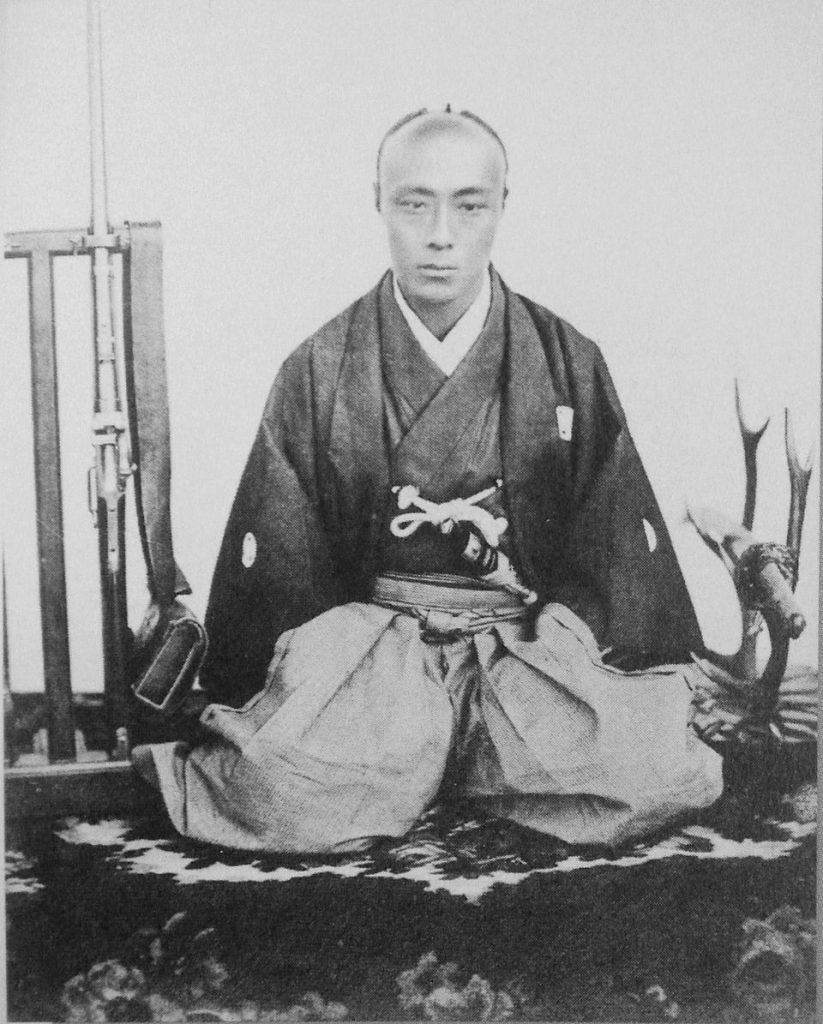
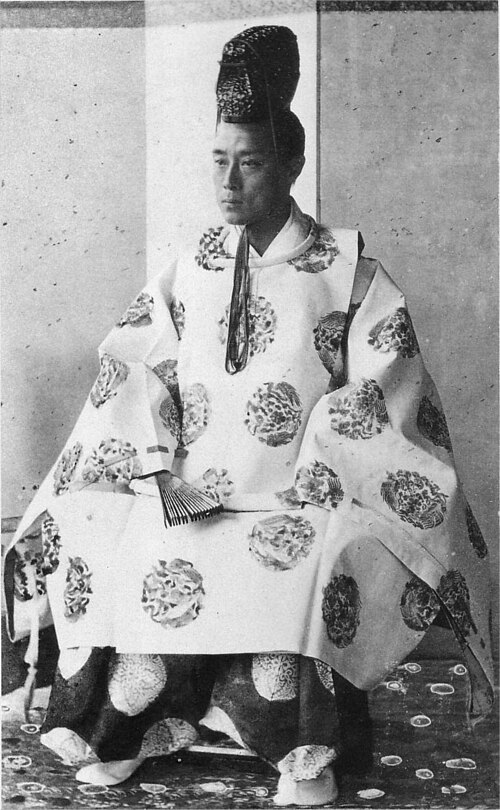
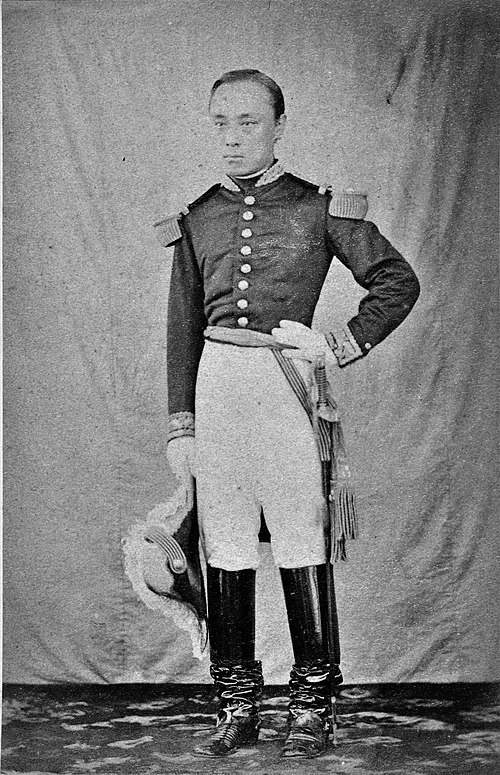
Yoshinobu is well known as a photography lover. He enjoyed not only taking photos but also being taken in photographs many times. Thanks to that, we can see today as well how he actually looked like.
His outfits and postures in those photos are so various. One time he sits politely on his knees wearing haori(羽織) and hakama with wakizashi (脇差, a short type of Japanese swords) on the waist as a samurai (侍, the military aristocrat class, who were ruling Japan at that time), another time he wears ikan-sokutai(衣冠束帯) just the same way as a kuge(公家, the Japanese traditional aristocrat class, who directly served the emperor in Kyoto). On one occasion, he stands up in a uniform of the French Army, which was sent from Napoleon III., and on another, he rides a horse bravely. Those photographs do not bore you at all.
His appearance has a modern atmosphere and therefore is so familiar to us. Moreover, on many websites about Bakumatsu (幕末, the end of Edo), the explanations about Yoshinobu with the word “イケメン” (ikemen, which means “handsome” in Japanese) can be found. So, it could be said that he is handsome in light of the sense of beauty in modern Japan.
However, it is said that the sense of beauty in Edo era differs from that of today. Besides, many western people also visited and met Yoshinobu in Bakumatsu era. How did the people in those days actually repute his appearance? Let’s seek out the answer together.
Firstly, here is an episode in Yoshinobu’s biography Tokugawa Yoshinobu Kō Den (徳川慶喜公伝) answering the question above. At that time, Yoshinobu moved from his homeland Mito (水戸) to Edo (江戸, now Tokyo) to be adopted into Hitotsubashi Tokugawa Family (一橋徳川家). There, Yoshinobu met the shogun Ieyoshi (家慶, the 12th shogun of Tokugawa shogunate) for the first time.
‘Lord Ieyoshi loved Yoshinobu extraordinarily and said “He really looks like Hatsunojō (初之丞, aka. Hitotsubashi Yoshimasa 一橋慶昌, Ieyoshi’s dead son).” The people in Ōoku (the women’s quarters of Edo Castle) were also delighted and rumoured that Yoshinobu was smart and looked beautiful, therefore Ieyoshi loved him the more. (by Asahina Kansui Shuki)‘1
This episode was originally written in the notes by Asahina Kansui (朝比奈閑水), called Asahina Kansui Shuki (朝比奈閑水手記). Asahina was a samurai, who served and took care of Ieyoshi very closely at that time. This story was told by such a person who spent almost all his time in the shogun’s private space in those days and therefore has its own credibility to a certain extent.
Now, I dig deeper into Asahina Kansui Shuki by referring to Tokugawa Yoshinobu Kō Den, Shiryō Hen Vol.1 (徳川慶喜公伝 史料篇1), in which those Asahina’s notes are introduced. The Shiryō Hen series are the compilation of historical documents used for writing of the biography Tokugawa Yoshinobu Kō Den itself. One of the notes describes the story around when Ieyoshi met Yoshinobu for the first time.
‘When Lord Ieyoshi met Yoshinobu for the first time in September Kōka 4 (AD 1848), Ieyoshi said “He really looked like Hatsunojō”. Ieyoshi loved him in the beginning, not for difficult reasons like that he was smart or that he was promising, but simply because he was just adorable at first sight. Later, as Yoshinobu gradually grew up, Ieyoshi got to know that he was smart as well. At this point, Ieyoshi’s mind also seems to have fully changed and begun to think that he was not only adorable but also very promising.‘2
This description should give you the idea how Ieyoshi (and probably also the people in Ōoku) could not help but love little Yoshinobu for his adorableness with no other reason.
Secondly, I introduce another episode by Asahina from Shiryō Hen Vol.1, in which the episode appears as one during the issue of Shogunal Succession (around AD 1857). At that time, Asahina served very closely and took care of the 13th shogun Iesada(家定), who is a son and the successor of the 12th shogun Ieyoshi. Yoshinobu himself had grown up and become a youth around 20 years old. Asahina says,
‘Lord Iesada was not pleased that Yoshinobu would be his successor. Besides, some people guessed, Iesada thought to himself deeply that he would have to resign his throne and retire right away if Yoshinobu was chosen to be his successor. But, having served and seen the lord very closely, I do not think that he had such a deep thought. Rather, the reasons why he hated Yoshinobu seemed to be, for one, that the Ōoku’s opinion had a strong influence on his thought, for another, that some women in the Ōoku praised Yoshinobu. They were not talking about Yoshinobu’s upbringing in Mito or his smartness but rumouring that he looked beautiful or something. On the contrary, about Iesada, it is difficult to say that he looked beautiful. He was also ashamed of his own behaviour, and you could not mention his appearance. […]Iesada was very jealous of the reputation by the Ōoku women of men, such as ones outside the Ōoku and Noh players, so he may have been jealous of Yoshinobu likewise, though it is difficult to say what the truth was.‘3
Thus, after Ieyoshi’s death, Yoshinobu was expected by people around him to be the successor of sickly Iesada, for his sturdiness and smartness. However, because he was praised also for his beauty by the Ōoku women, Iesada got so jealous and hated him.
From the above, it could be said that Yoshinobu was handsome also in light of the sense of beauty that Japanese people had in those days.
Lastly, let’s see what kind of impressions of Yoshinobu the western people had. Many diplomats from Europe and America visited and met him at Ōzaka Castle (大坂城, Ōzaka-jō) in Keiō 3 (AD 1867). He was 29 years old and had already become the 15th shogun at that time. Among those diplomats, Algernon Mitford and Ernest Satow representing the United Kingdom evaluated him as below;
‘I think he was the handsomest man, according to our ideas, that I saw during all the years that I was in Japan.[…]His features were regular, his eye brilliantly lighted and keen, his complexion a clear, healthy olive colour. The mouth was very firm, but his expression when he smiled was gentle and singularly winning. His frame was well-knit and strong, the figure of a man of great activity‘4 ― Mitford
‘He was one of the most aristocratic-looking Japanese I have ever seen, of fair complexion, with a high forehead and well-cut nose ― such a gentleman.‘5 ― Satow
Thus, also from the point of view of western people in those days, he was handsome. Besides Mitford and Satow, other western people also told that they had very good impressions of him.
Up to here, I introduced that Yoshinobu was thought to be handsome also in those days. Summing up those episodes above, Yoshinobu was handsome in light of the sense of beauty that the people had in those days, whether it is in Eastern or Western. Namely, it could also be said that he had a universally attractive character.
See you next time!
[Footnotes]
- Shibusawa, Eiichi. Tokugawa Yoshinobu Kō Den Vol.1, Heibonsha, 1967, p.62 ↩︎
- Nihon Shiseki Kyokai. Tokugawa Yoshinobu Kō Den, Shiryō Hen Vol.1, University of Tokyo Press, 1997, p.237 ↩︎
- Ibid., pp.243-244 ↩︎
- Redesdale, Algernon Bertram Freeman-Mitford, Baron. Memories Vol.1, London : Hutchinson & Co., 1915, p.394 ↩︎
- Ernest Satow. A Diplomat in Japan, London : Seeley, Service & Co. Limited, 1921, p.200 ↩︎
[Reference]
・Shibusawa, Eiichi. Tokugawa Yoshinobu Ko Den, Heibonsha, 1967
・Nihon Shiseki Kyokai. Tokugawa Yoshinobu Kō Den, Shiryō Hen Vol.1, University of Tokyo Press, 1997
・Hagihara Nobutoshi. Tōi Gake Vol.4, The Asahi Shimbun Company, 1999
・Redesdale, Algernon Bertram Freeman-Mitford, Baron. Memories Vol.1, London : Hutchinson & Co., 1915
・Ernest Satow. A Diplomat in Japan, London : Seeley, Service & Co. Limited, 1921
Unauthorised reproduction or distribution prohibited.